Every Toyota owner eventually wonders how much of that oil-change appointment could disappear with a hybrid or an electric vehicle. For Ontario drivers weighing the 4Runner, RAV4 Plug-in Hybrid, and bZ Woodland, the answer depends less on the badge and more on what sits under the hood.
The short version: industry data puts the yearly maintenance gap at roughly $400 for hybrids and $600 for electric vehicles compared to a similar gas model. This guide uses Toyota’s own maintenance schedules to show exactly where those savings come from, so you can see what actually changes in routine service between these three vehicles.
What “Maintenance Savings” Actually Means
“Maintenance savings” does not mean a lower sticker price. It means fewer parts that wear out, fewer fluids that need replacing, and sometimes fewer trips to the service department altogether.
This comparison sticks to ownership tasks: what gets inspected, replaced, or serviced on each vehicle, and how often. Purchase price is a separate comparison for another day.
One important note: none of the figures here include what you save at the pump. Fuel and electricity costs follow their own math, and for a plug-in hybrid or EV charged at home, the gap between electricity and gasoline is often larger than the maintenance gap itself. The numbers below are maintenance only, so any fuel savings come on top of them. Insurance and financing sit outside this comparison as well.
How Toyota’s Service Schedules Differ by Powertrain

The 4Runner’s 2.4-litre turbocharged four-cylinder engine (278 hp, 317 lb-ft) needs the service items any gasoline engine needs: oil changes, spark plug replacement, engine air filter service, exhaust inspection, and fuel-system checks.
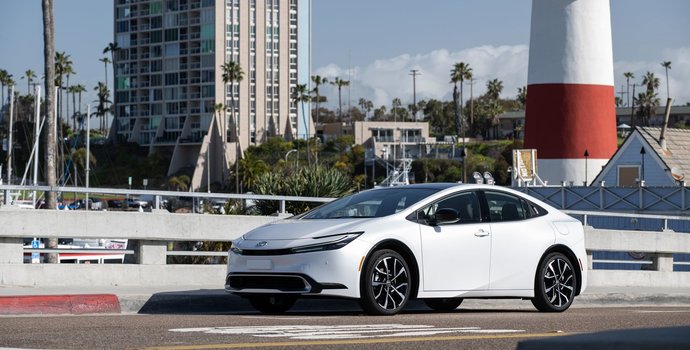
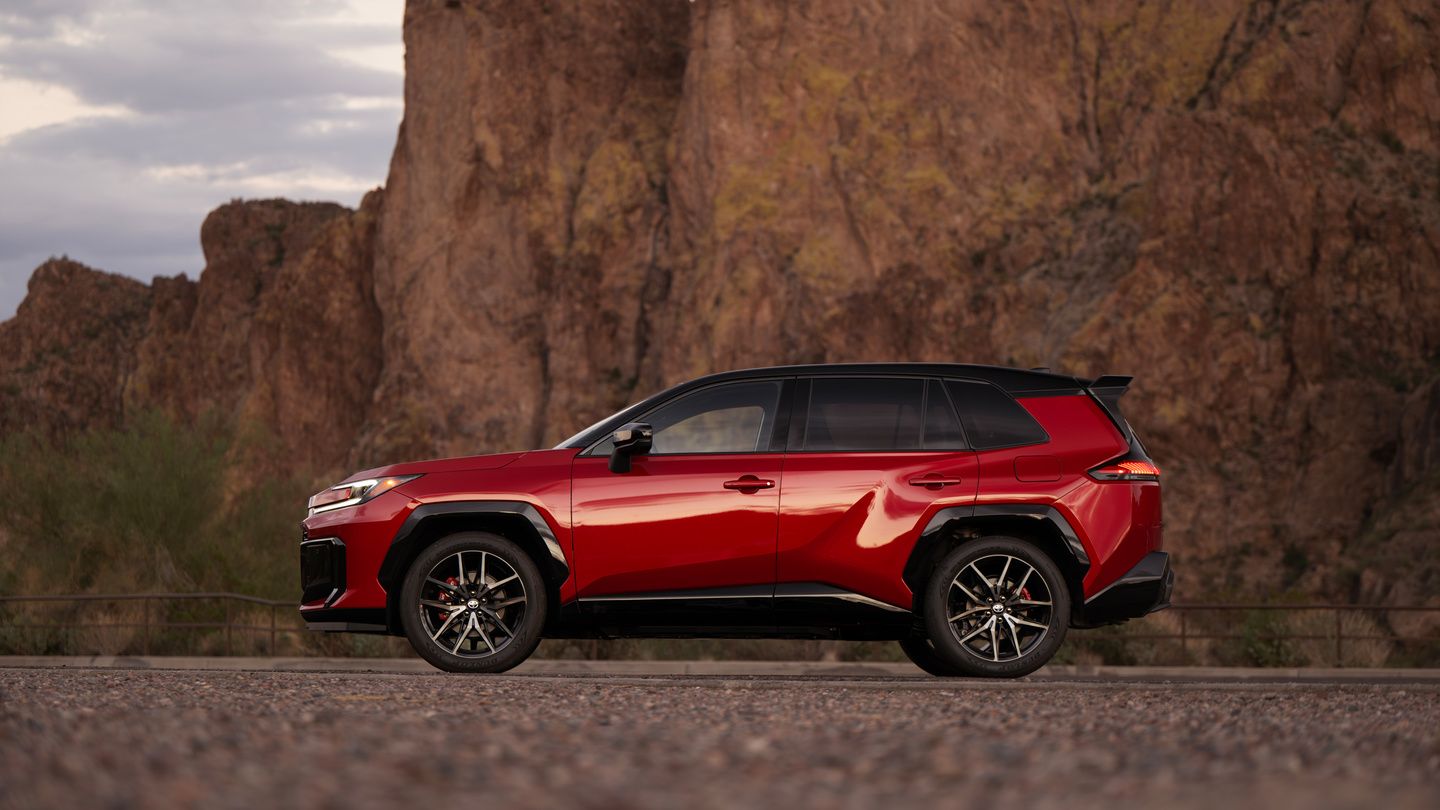
The RAV4 Plug-in Hybrid can run on electric power alone for a while, but it still carries a 2.5-litre four-cylinder engine paired with its plug-in hybrid system for 324 system horsepower. That means the same list of engine-related tasks lands on its schedule, at the same intervals as the 4Runner.
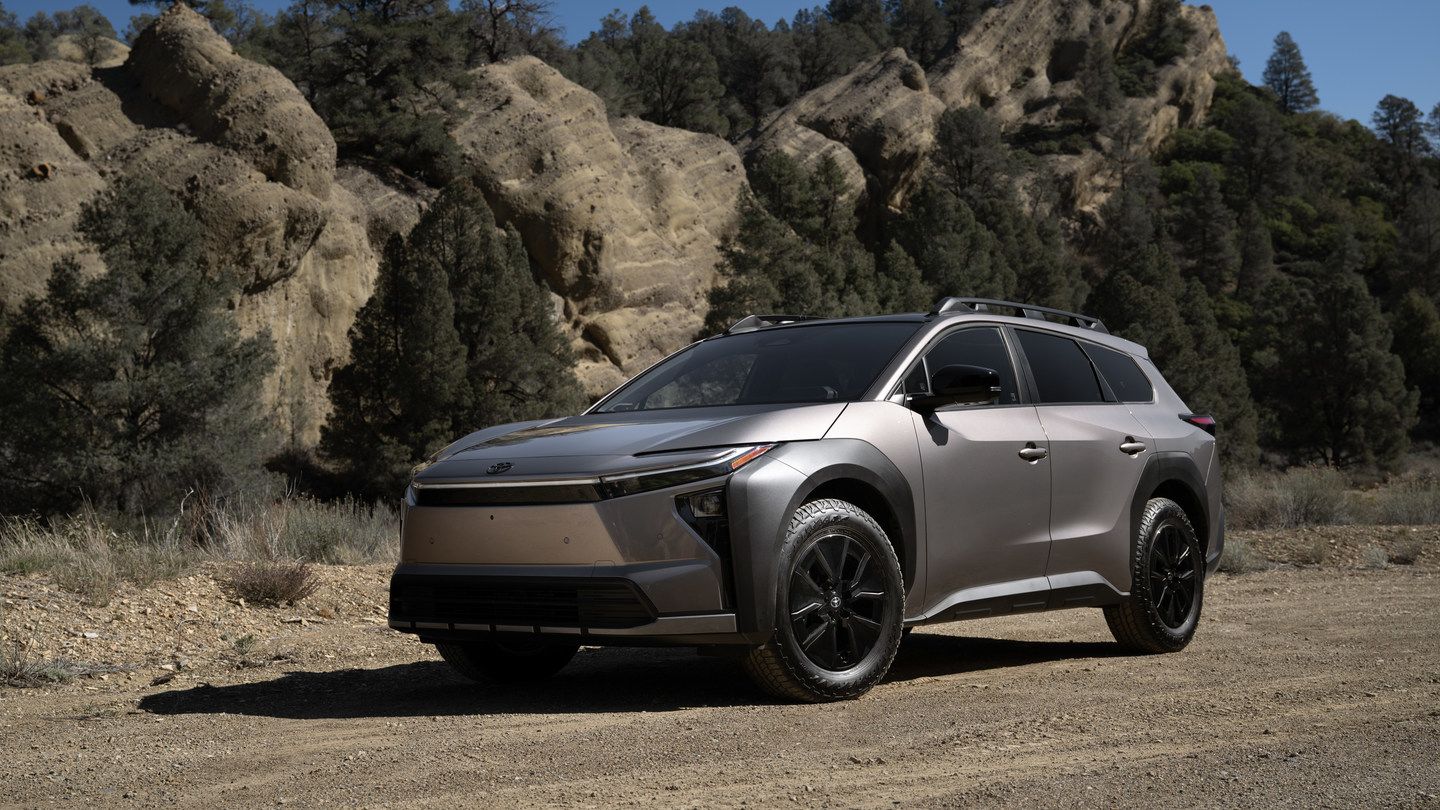
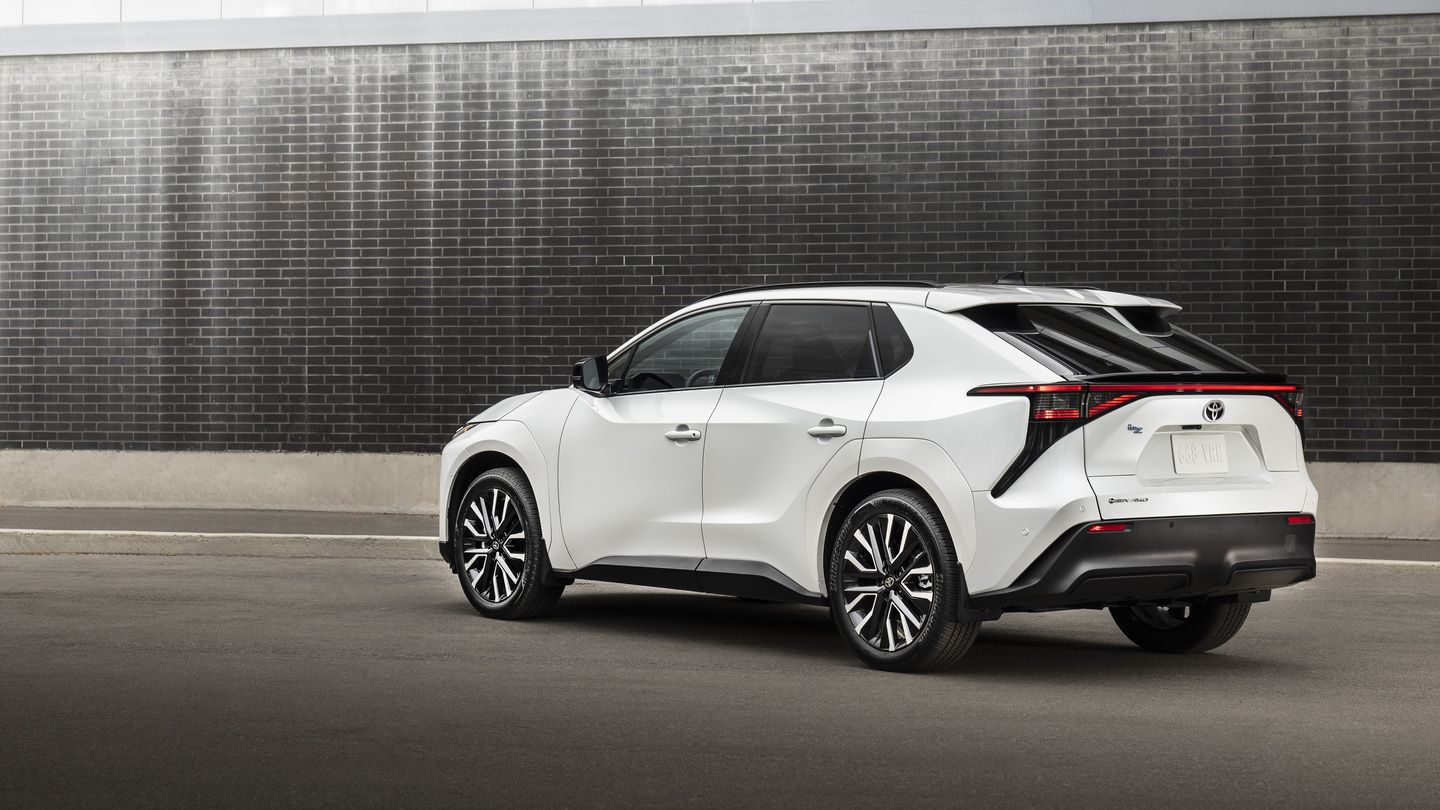
The bZ Woodland skips all of it. With no engine and no exhaust system, its scheduled visits focus on tire rotation, brake inspection, cabin air filter service, and checks for coolant and eAxle leaks.
All three vehicles follow the same 15-visit factory schedule cadence over 90 months, called Service #1 through #3 on the gas and plug-in hybrid models and e-Maintenance #1 through #3 on the bZ Woodland. All three also call for brake fluid replacement at the 36- and 72-month marks, so visit frequency is not what separates them. It is what happens at each visit.
|
Maintenance Task
|
4Runner & RAV4 Plug-in Hybrid
|
bZ Woodland
|
|
Oil changes
|
Yes
|
No
|
|
Spark plug replacement
|
Yes
|
No
|
|
Engine air filter service
|
Yes
|
No
|
|
Exhaust inspection
|
Yes
|
No
|
|
Fuel-system checks
|
Yes
|
No
|
|
Tire rotation
|
Yes
|
Yes
|
|
Brake inspection
|
Yes
|
Yes
|
|
Cabin air filter
|
Yes
|
Yes
|
|
Coolant / eAxle leak check
|
Yes
|
Yes
|
|
Brake fluid replacement (36/72 mo)
|
Yes
|
Yes
|
Why the Difference Shows Up in Real Ownership Costs
Start with the broader industry picture. AAA’s most recent Driving Costs study puts annual maintenance for compact SUVs and sedans at roughly $2,500 for gas models versus $1,900 for EVs and $2,100 for hybrids — about $600 a year saved with an EV and $400 a year with a hybrid. Consumer Reports’ lifetime cost analysis found battery-electric and plug-in hybrid owners pay about half what gasoline owners pay in repair and maintenance over the vehicle’s life, and a CAA survey of EV drivers found savings closer to 40% to 50%. The longer the ownership window, the wider the gap grows, as items like spark plugs, timing components, and exhaust work accumulate on the gas side.
Toyota’s own schedules for these three models tell the same story on a smaller scale. Across the first five years and ten scheduled visits, a 4Runner or RAV4 Plug-in Hybrid runs through roughly $1,950 in scheduled service, plus periodic transmission service near the 96,000 km mark and four-wheel brake service around 24,000 km. A bZ Woodland’s scheduled visits land closer to $1,575 to $1,825, with no transmission service since it uses a single-speed reduction gear instead of a geared transmission. That’s roughly $675 to $925 saved on scheduled service alone, a 27% to 37% reduction, before the unscheduled engine wear items that widen the gap over a longer ownership window.
The RAV4 Plug-in Hybrid sits in an interesting middle spot. Its scheduled list matches the 4Runner’s on paper, since the gasoline engine underneath still needs looking after, but real-world hybrid ownership tends to cost less than the schedule suggests. Regenerative braking, which both the RAV4 Plug-in Hybrid and the bZ Woodland use, takes load off the friction brakes and can defer brake service on either vehicle, and every kilometre driven on electric power is a kilometre of reduced wear on the engine. That’s the gap the AAA hybrid figure reflects.
Higher mileage, colder months, or rougher roads can add dealer-recommended service on any of these three vehicles, regardless of powertrain.
Pricing shown here is a broad estimate for illustration only. Speak with Georgetown Toyota’s service department for accurate, up-to-date maintenance pricing on your specific model.
Matching the Powertrain to How You Actually Drive
The three models above are examples, not a shopping list. What matters is the powertrain type, and the same maintenance logic applies across Toyota’s 2026 lineup: any gasoline model follows the engine-based schedule, any plug-in hybrid pairs that schedule with electric driving that reduces real-world wear, and any EV drops the engine tasks entirely.
If your driving involves towing a trailer, hauling gear off-pavement, or long highway stretches, a gasoline model like the 4Runner is worth the oil changes and spark plug replacements that come with it. Those tasks are simply part of keeping that kind of capability running, whichever gas Toyota fits your needs.
If your daily routine is a short commute with the occasional longer weekend trip, a plug-in hybrid such as the RAV4 Plug-in Hybrid, with roughly 80 km of electric range, covers plenty of driving without touching a gas station. A PHEV’s scheduled service follows the same engine-based cadence as a gas model, but the more of your driving that happens on electric power, the less wear those visits find, and the more you save on fuel along the way.
If the goal is skipping engine maintenance entirely, an EV like the bZ Woodland, with its dual-motor electric powertrain, has no oil, spark plugs, or exhaust system to service. An EV’s scheduled visits stay focused on tires, brakes, and filters, provided home or public charging fits your daily driving, up to 452 km of range in the bZ Woodland’s case.
Choosing the Right Toyota for Your Maintenance Routine
A gasoline Toyota suits drivers who tow, go off-pavement, or drive in tougher year-round conditions, and accept that engine service comes with that capability. A plug-in hybrid suits shorter commutes with occasional longer trips, with real-world savings that grow the more it runs on electric power. An EV suits drivers who want tires, brakes, and filters as their only recurring service.
Visit Georgetown Toyota to explore the 4Runner, RAV4 Plug-in Hybrid, and bZ Woodland lineup, and ask the service team how each model’s maintenance schedule fits your driving.
You might also be interested in these blogs: