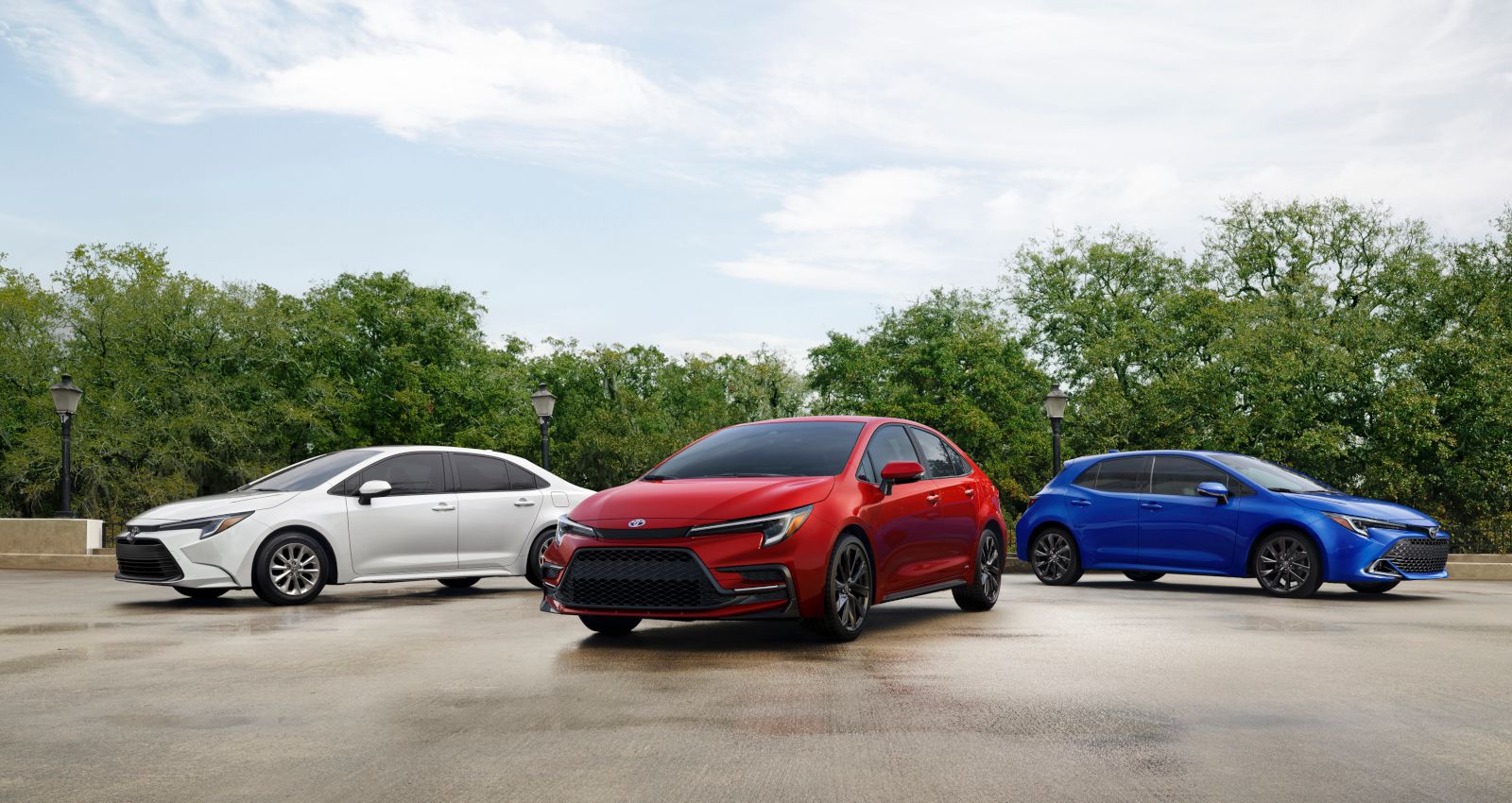
Shopping for a compact car in Ontario often starts with one name: Corolla. For 2026, Toyota splits the lineup into a gasoline sedan, a hybrid sedan, and a hatchback, and each one is built around a slightly different driving priority.
The real question isn’t which Corolla is best overall. It’s which powertrain, drivetrain, and trim combination actually matches how you drive every day. This guide breaks that down before you set foot on a lot.
Explore the Toyota Corolla Lineup
From the efficient Corolla Hybrid and cargo-friendly Hatchback to the responsive Sedan, the Corolla lineup offers a model for different driving priorities. Explore our selection at Georgetown Toyota and find the Corolla that fits your daily routine.
Shop Toyota Corolla >
What Every 2026 Corolla Shares
Every 2026 Corolla, gasoline or hybrid, rides on Toyota’s TNGA platform, which keeps the centre of gravity low and the body structure rigid. That engineering foundation carries through the whole lineup, from the L trim up to the XSE.
Standard safety technology is identical across the board too. Toyota Safety Sense 3.0 bundles Pre-Collision System, Lane Departure Alert, Lane Tracing Assist, Dynamic Radar Cruise Control, Automatic High Beam, and Road Sign Assist, backed by the Star Safety System, a backup camera, and 10 airbags on every trim.
Toyota Multimedia with wireless Apple CarPlay and Android Auto compatibility is also standard across the lineup. Screen size grows as you move up in trim, but the core connectivity doesn’t change.
Gasoline or Hybrid: Two Different Answers
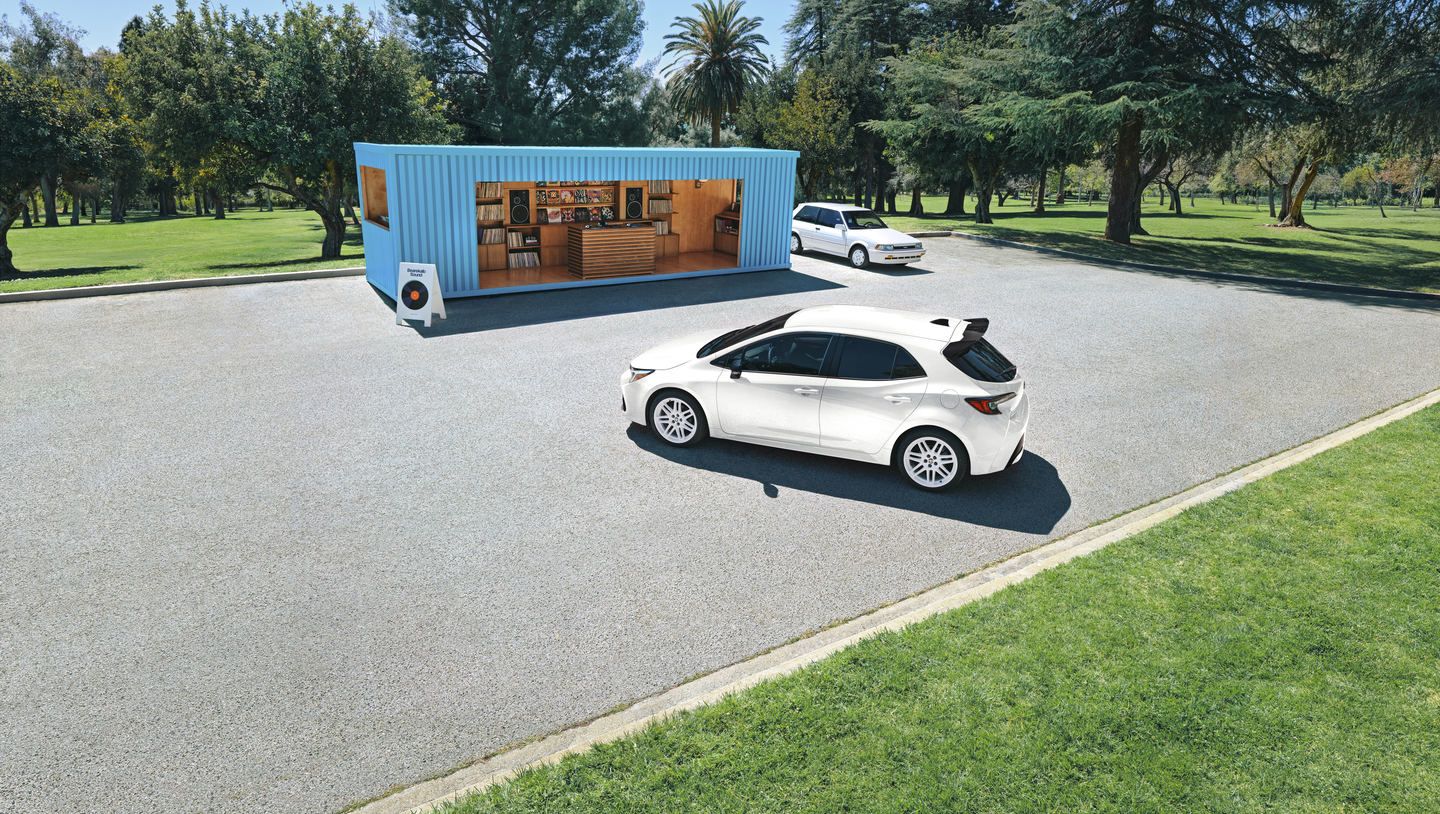
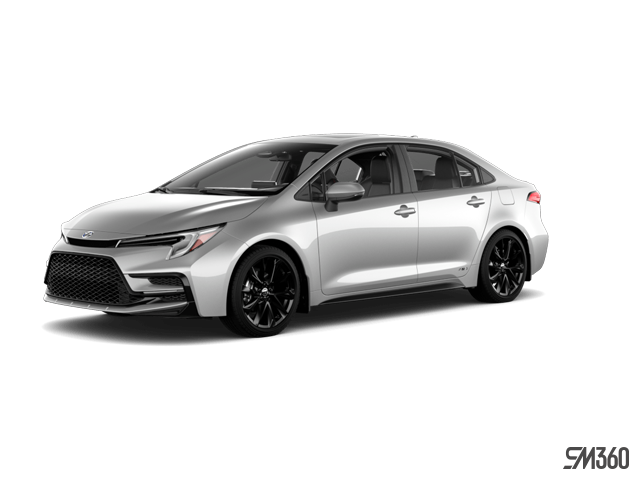
The gasoline Corolla runs a 2.0L four-cylinder engine producing 169 hp and 151 lb-ft of torque, paired with a Direct Shift CVT and front-wheel drive on every trim. It’s the choice for drivers who want a quicker, more responsive feel and don’t need all-wheel traction.
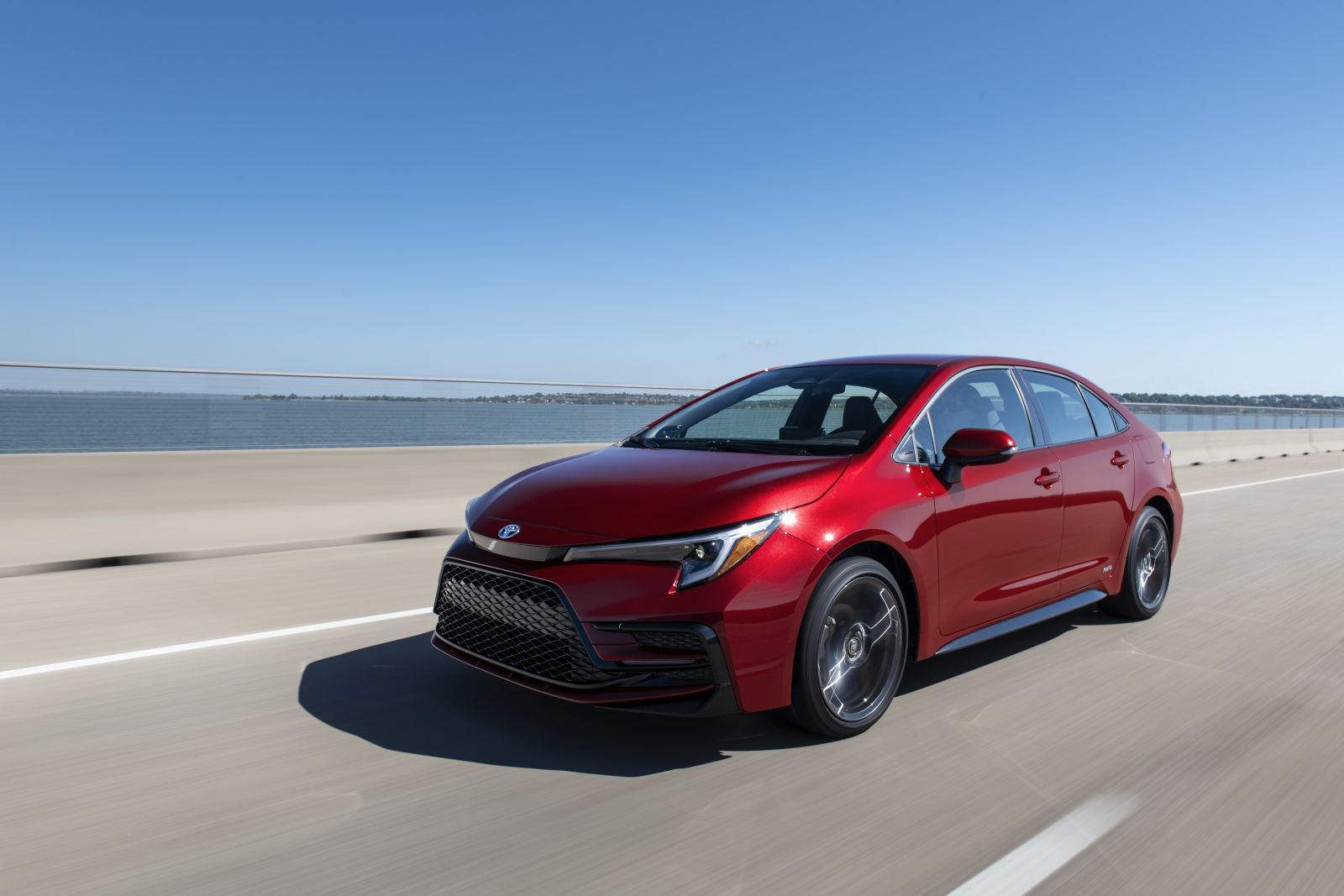
The Corolla Hybrid swaps in a 1.8L four-cylinder paired with Toyota’s hybrid system and an electronically controlled CVT (eCVT), producing 138 hp combined. The trade-off runs the other direction: the Hybrid LE is rated as low as 4.7 L/100km combined, against 6.7 L/100km combined on the gasoline L and LE. That’s a real gap for anyone racking up highway kilometres.
Drivetrain is where the two powertrains separate further. Every gasoline Corolla sedan is front-wheel drive only, with no AWD option at any trim. The Hybrid LE is also FWD, but the Hybrid LE AWD, SE AWD, and XSE AWD trims add Toyota’s electronic on-demand all-wheel-drive system, which uses separate rear-mounted electric motors to power the rear wheels when conditions call for it.
For Ontario winters, that AWD option is often the bigger reason to choose the hybrid over the fuel savings alone.
Toyota also groups the gasoline sedans into two families: the L Line (L, LE) leans toward comfort and value, while the S Line (SE, XSE) pushes sportier styling and tuning. The hybrid mirrors that same split with its own L Line (LE, LE AWD) and S Line (SE AWD, XSE AWD).
|
Trim
|
Horsepower
|
Combined Fuel Economy
|
|
L
|
169 hp
|
6.7 L/100km
|
|
LE
|
169 hp
|
6.7 L/100km
|
|
SE
|
169 hp
|
6.8 L/100km
|
|
XSE
|
169 hp
|
6.8 L/100km
|
|
Hybrid LE
|
138 hp
|
4.7 L/100km
|
|
Hybrid LE AWD
|
138 hp
|
4.9 L/100km
|
|
Hybrid SE AWD
|
138 hp
|
5.3 L/100km
|
|
Hybrid XSE AWD
|
138 hp
|
5.3 L/100km
|
Key Buying Factors for the 2026 Corolla
- Powertrain trade-off: gasoline favours quicker acceleration feel; hybrid favours lower fuel bills and adds an AWD option the gas sedan never gets.
- Suspension tuning by trim line: the gasoline L and LE use a torsion-beam rear suspension, while the SE and XSE step up to a multi-link rear suspension tuned for a more connected feel. Every hybrid trim, LE through XSE AWD, comes standard with the multi-link setup.
- Screen and cluster growth: the L opens with an 8-inch touchscreen and 7-inch digital gauge cluster; the SE moves to a 10.5-inch touchscreen; the XSE tops the range with a 12.3-inch digital gauge cluster and a 9-speaker JBL audio system, versus 6 speakers on the L.
- Wheels scale with trim: 15-inch wheels on the L, 16-inch on the LE, and 18-inch alloys on the XSE, each paired with a progressively wider tire.
Sedan or Hatchback: Packaging for Your Daily Drive
The gasoline and hybrid sedans share a 371 L cargo hold, accessed through a conventional trunk opening. That’s fine for groceries and weekend bags, but it limits what fits when you’re hauling something bulkier, like a bike or flat-pack furniture.
The Corolla Hatchback trades that trunk for a rear liftgate, opening a wider load floor for taller cargo. Its powertrain and drivetrain lineup is configured separately from the sedan, so AWD availability and trim-specific features should be confirmed directly.
Which 2026 Corolla Fits Your Driving Life
Commuters logging steady highway kilometres and chasing the lowest fuel bills should start with the Hybrid LE or LE AWD. The 1.8L hybrid system and eCVT are tuned for efficiency over quick throttle response.
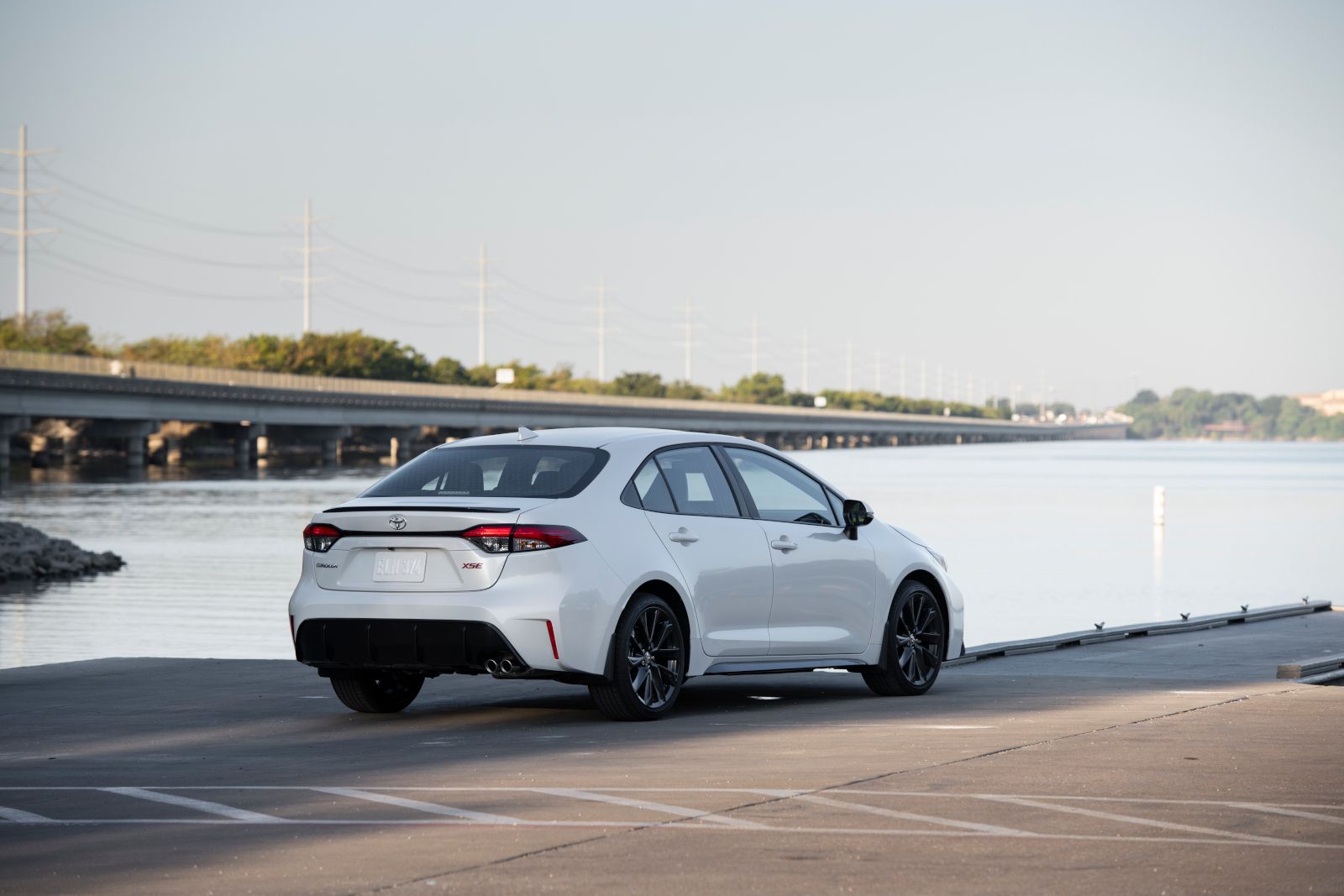
Drivers who want a livelier feel and don’t need AWD are better served by the gasoline SE or XSE. The multi-link rear suspension on those two trims, paired with the 2.0L engine’s 169 hp, gives a more connected road feel than the L Line’s torsion-beam setup.
Anyone parking on unplowed streets or covering rural Ontario roads through winter should weigh the Hybrid SE AWD or XSE AWD. The rear-motor AWD system adds traction exactly when front-wheel drive alone would struggle, without giving up the hybrid’s efficiency.
Families or drivers who regularly haul gear, from sports equipment to bulky boxes, will get more use out of the Hatchback’s liftgate access than either sedan body style offers.
Finding Your 2026 Corolla at Georgetown Toyota
The 2026 Corolla lineup covers a wide range of needs through one nameplate, from the efficient hybrid sedan to the sportier gas S Line trims and the cargo-friendly hatchback. Comparing engine, drivetrain, and trim features narrows your choice before you sit in one.
Visit Georgetown Toyota in Georgetown to sit in the trims that interest you most. Build your preferred Corolla configuration online, then bring your shortlist in for a test drive.
You might also be interested in these blogs: